State of ISP Proxies in 2026: What Providers Hope You Never Test
Most ISP proxies are shared, oversubscribed, or repackaged. In this article, we are going to discuss what actually matters.

Gunnar
Last updated -
Why Hype Proxies
TL;DR:
The proxy market in 2026 is flooded with providers selling $0.50 "premium ISP" subnets that can't be delivered at that price without double-selling IPs, oversubscribing bandwidth, or repackaging lower-quality pools. Customers discover the truth only after they miss a drop, their scrapes time out, or their data pipeline silently breaks. I'm going to break down the real infrastructure costs, show how cheap providers actually make the math work, and tell you what to look for before you commit.
The proxy market has a transparency problem
If you've been in this space long enough, you've seen the ads.
"50 million IPs". "Premium ISP". "True residential". "$0.50 per IP". "Unlimited everything".
If you're new to proxies, these numbers probably sound impressive. If you've been around, you know something doesn't add up.
The proxy industry in 2026 is bigger than it has ever been. Over 250 proxy vendors now crowd the marketplace, and sustained price competition has been gutting margins since mid-2023. Most of those 250+ providers compete on the same residential baseline – rotating IPs, global coverage, mobile pools, sticky sessions. The ISP proxy segment is smaller, but the same race-to-the-bottom pricing has hit it hard. The only differentiator left is who charges the least.
Competition isn't the issue. Competition is healthy. The issue is that the race to the bottom has created a market where customers can't tell the difference between real infrastructure and repackaged junk until it's too late.
I started HypeProxies in 2019 out of a dorm room at Mississippi State with $1,200 in the account. Today, HypeProxies processes over 60 billion requests per month across infrastructure we own and operate, serving 20,000+ users with a 4.7 Trustpilot rating.
I'm writing this because too many teams are getting burned by pricing that looks good on paper but collapses under real load.
Here’s the maths that nobody wants to tell you
This is what what it actually costs to run a single dedicated ISP proxy:
IP lease: $0.40 to $0.50 per IP
Enterprise-grade servers: dedicated hardware, not shared VMs
Transit and bandwidth: 10 to 100 Gbps of internet transit capacity
Colocation: power, rack space, cooling, physical security
Routing infrastructure: BGP sessions, ASN management, route announcements
Engineering and support: actual humans who can fix problems at 1 AM
ARIN/RIPE compliance and legal costs: IP registration, audits, documentation
When you add it all up, the real loaded cost of running a single dedicated ISP proxy lands between $1.50 and $3.00 per IP depending on the deployment. So if the IP alone costs $0.40 to $0.50, how is someone selling a dedicated 1:1 subnet at $0.50 per IP?
They're not. Not honestly, at least.
There are only 3 ways that math works:
1. Double selling the Same IP to Multiple Customers
This is the most common trick. A provider leases 10,000 IPs, then sells "dedicated" access to 2, 3, sometimes 5 different customers on the same IPs. The customer thinks they have exclusive access. They don't.
When one customer's traffic flags an IP, every customer sharing that IP eats the consequences. You get blocked, and you have no idea why because from your side the IP looked clean when you started using it.
2. Oversubscribing bandwidth until performance collapses
Same idea as cheap web hosting. Sell 100 customers "10 Gbps" on a pipe that can actually deliver 10 Gbps total. Works fine when only a few people are active. The moment everyone runs jobs simultaneously, which happens during every major drop and peak scraping window, speeds crater and connections time out.
Behavioral analysis and canvas fingerprinting catch the rest. Leading bot management platforms now claim 99.9% accuracy in distinguishing humans from bots through behavioral biometrics alone. Repackaged datacenter IPs don't stand a chance against any of this.
What customers actually experience (when it's already too late)
You sign up. You run a small test. Everything looks fine. Success rates are acceptable. Speeds seem reasonable. You think, "This provider is great and half the price of the alternatives".
Then you go live. And here's what happens: on cheap infrastructure, the failures aren't random noise. They're structural waste baked into oversubscribed pipes and shared IPs.
Missed drops and time-sensitive failures
If you run sneaker infrastructure, ticketing bots, or any operation where timing matters, you know what it feels like when your proxies choke during a release window. The drop happens. Your requests queue up behind oversubscribed bandwidth. By the time they go through, the inventory is gone.
I've watched this happen to teams who were running fine in testing and then collapsed during the drop. Testing at low volume doesn't stress-test the shared pipe. Peak load does.
Silent scraping failures
This one is worse because you don't even know it's happening.
You send 10 million scraping requests. Your logs say 97% success rate. That 3% represents 300,000 missing records. If you're running price intelligence, that could be entire product categories. If you're doing SERP tracking, that's ranking data you're billing clients for but not actually delivering. If you're feeding an AI training pipeline, that's incomplete datasets introducing bias you can't see.
I've seen a price intelligence team lose a major client because 3% of their records came back empty. That 3% happened to include the client's top-selling SKUs. By the time they caught it, their client had already missed a pricing window against a competitor. The client didn't renew.
Scrapes that time out under load
When your provider oversubscribes bandwidth, you don't get an error message that says "bandwidth exceeded". You get timeouts, your scraper retries, and it times out again. Your retry logic burns through your IP allocation, trying the same congested path.
Your logs show "connection timeout" and you blame your code, your target site, or your scraping framework. But the bottleneck was never on your end. It was the shared pipe you didn't know you were sharing.
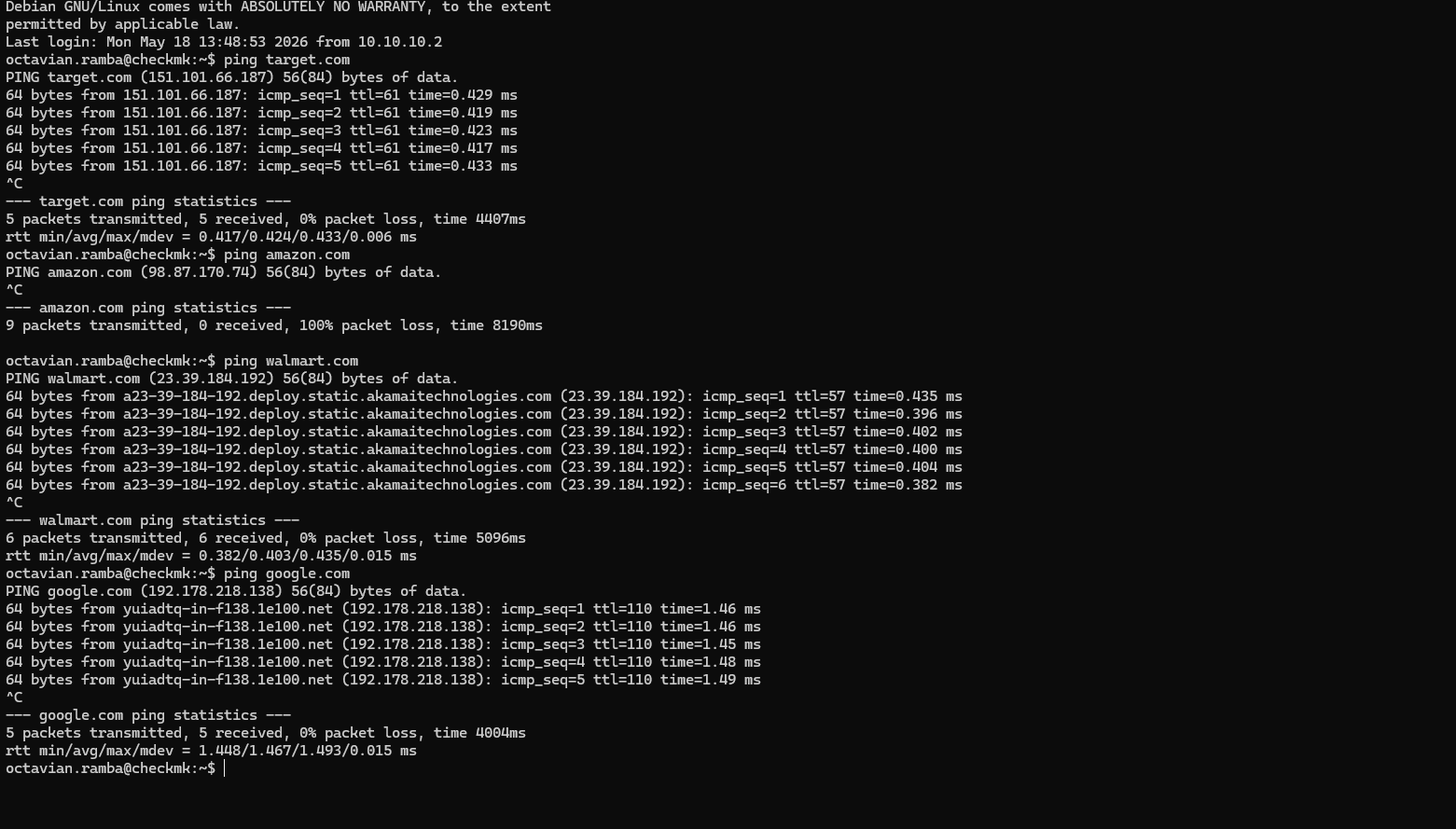
Live latency check from Hypeproxies's newly opened datacenter in Dallas showing <1ms response time to Amazon, Walmart, and Target. Lower latency means quicker requests during checkouts, queue entries, and high-demand drops.
IP reputation degradation you can't control
When you share IPs with other customers, their traffic patterns affect your reputation. If someone on your shared subnet is running aggressive, poorly configured bots, anti-bot systems flag the entire range. Your well-configured requests get blocked because of someone else's behavior on IPs you thought were exclusively yours.
This is getting worse, not better. Anti-bot systems now reconfigure their detection mechanisms continuously. One major bot management vendor deployed more than 25 version changes over a 10-month period, often releasing updates multiple times per week.
The unblocking timeline has flipped. What used to take 2 days of work to gain 2 weeks of access now takes 2 weeks of work for 2 days of access.
Nearly 90% of scraping professionals report that their costs increased when targeting anti-bot protected sites, and nearly half say the job is harder now than a year ago.
When anti-bot defenses can spike your extraction costs 5x, 10x, or even 50x overnight after a single system upgrade, the quality of your proxy infrastructure isn't just a performance question. It's a survival question.
The worst failures aren't the ones that crash your pipeline. They're the ones that look like they succeeded.
Pool size is a vanity metric
Every provider leads with the same headline. "50 million IPs". "100 million residential endpoints". "Largest pool in the industry".
When a provider brags about having 50 million IPs, they're counting every device that has ever connected to their network. That includes IPs that haven't been active in months. IPs that got burned by other customers running aggressive traffic. IPs that cycle through dozens of users daily.
You don't need 50 million IPs to scrape at scale. You need IPs that platforms haven't already flagged. Static residential or ISP IPs that hold sessions without rotating into burned ranges. And infrastructure that isolates your traffic so you're not sharing IP reputation with every other customer on the network.
1,000 dedicated static IPs will outperform 50 million recycled rotating IPs in any scenario where IP reputation and session stability matter.
The industry got a concrete reminder of this in January 2026, when Google disrupted a network of proxy brands, including 922 Proxy, Luna Proxy, IP2World, and others, all controlled by a single Hong Kong-based operator. 9M devices were enrolled through multiple methods:
Monetization SDKs buried inside 600+ Android apps
Free VPN services operated by the same network
Trojanized Windows programs disguised as OneDriveSync and Windows Update
Proxy software pre-installed on off-brand Android TV boxes
Most users had no idea their connections were being resold as proxy exit nodes. Over 550 threat groups had been routing traffic through that infrastructure. That is the supply chain behind many of those "50 million IP" pools.
When your provider can't tell you exactly where their IPs come from, this is why it matters.
The question to ask any provider: "How many of your IPs aren't burned right now, and can I get dedicated access instead of sharing the pool?"
If they can't answer that, the pool size number is meaningless.
The Bandwidth Tax No One Talks About
Most teams pick proxy providers the same way they pick cloud hosting. Compare the per-GB price. Pick the cheapest one. Move on. Then 3 weeks later, the bill comes in at 4x what they expected.
A nightly 10-million-request SERP job pulls serious bandwidth. At metered rates, that adds up fast, and teams don't realize it until the bill arrives. Providers advertise the monthly subscription cost in big numbers and bury the per-GB metering in fine print. I've watched teams go from a $200 monthly budget to a $2,000 surprise bill because they didn't realize their provider was metering bandwidth the entire time.
When you're operating at a serious scale, unlimited bandwidth isn't a marketing bullet point. It is the difference between predictable costs and budget chaos.
The question to ask: "Is bandwidth actually unlimited, or is there a soft cap that triggers throttling?"
Some providers advertise "unlimited" but throttle you once you hit a certain threshold. Real unlimited means you can push 100 TB monthly without a surprise bill or speed degradation. If your provider can't guarantee that, you're taking on cost risk that will blow up the moment you scale.
Here's a quick way to estimate your real bandwidth cost. A nightly SERP job pulling 10 million responses at roughly 50 KB each uses about 500 GB. At $5 per GB metered, that's $2,500 per month on top of your subscription. Just for bandwidth.
If your provider says "unlimited" but your speeds drop after 100 GB, run a sustained throughput test at peak hours and measure the actual transfer rate. If it drops below what you need, your provider is throttling you regardless of what the plan says.
This is exactly why every HypeProxies tier includes unlimited, unmetered bandwidth: no per-GB charges, no throttling thresholds.
5 Quick Steps To Verify What You're Paying For
You don't have to take any provider's word for it, including ours. Here are 5 tests I run on every proxy setup:
1. Fraud score check
Run IPs through fraud detection APIs. Real residential and ISP IPs should score low. If you're seeing high fraud scores, you're sitting in a datacenter pool someone renamed. We built a free IP fraud detector specifically for this: no login, no signup. It tests speed, latency, ASN, location, network info, WebRTC, DNS, headers, fraud score (0 to 100), and VPN/TOR detection.
2. Reverse DNS lookup
Real residential IPs resolve to ISP hostnames like Comcast, Verizon, or AT&T. Datacenter IPs resolve to hosting companies like AWS, DigitalOcean, or OVH. If your "residential" proxy resolves to a hosting provider, it's not residential. It is a datacenter IP with better marketing.
3. Geolocation consistency
Residential and ISP IPs stay in one geographic location. If your "residential" IP is in Texas one minute and Germany the next, it's not residential. It is being rotated through a pool that doesn't match what you were sold.
4. Throughput test under load
Run a sustained download test at the busiest time of day, not 1 AM when nobody else is on the pipe. Measure actual throughput, not advertised speed. If your "10 Gbps" connection drops below 2 Gbps during peak hours, the pipe is oversubscribed. Real unlimited bandwidth holds speed regardless of when you run.
5. ASN ownership check
Look up the ASN for your assigned IPs. If the provider claims to own their infrastructure but the ASN is registered to a cloud hosting company or another proxy provider, they're reselling. Tools like bgp.tools or PeeringDB show you who actually operates the network.
These tests take less than an hour.
What we built different at HypeProxies (& why it costs for what it costs)
Here's what your money actually pays for:
We own the infrastructure
We don't resell someone else's servers. We don't rent rack space and call it "our datacenter". We source our own IPs, run our own custom proxy software, and operate our own physical infrastructure: every rack, every route, every packet. Our primary infrastructure runs out of Ashburn, Virginia, sitting in "data center alley", one of the highest-density internet exchange points in the world.
Control matters more than convenience. Late night maintenance, cables, configs, constant fixes – but it's ours. When a third-party provider changes their policies, reroutes traffic, or has an outage, none of it touches our customers because our core proxy infrastructure doesn't depend on someone else's uptime.
We recently shipped 100,000 ISP proxies, 100 Gbps of internet transit, and 30 physical servers for a single enterprise data team. Not a slide. Not a promise. A live system moving traffic the same day it went online.
Share on

No credit card required. Request your free trial today.
Stay in the loop
Subscribe to our newsletter for the latest updates, product news, and more.
No spam. Unsubscribe at anytime.