10 Best ISP Proxies in 2026 (Ranked on Basis of Scalability, Pricing & Infrastructure)
In this blog, we have listed out best ISP proxies, we have evaluated & ranked them on the basis of scalability, pricing & infrastructure stability.

Gunnar
Last updated -
Why Hype Proxies
TL;DR
Tested 10 ISP Proxies on Scalability, Pricing & Infrastructure & Ranked Them.
Fastest ISP Proxy in USA: HypeProxies – $1.30/IP (Pro plan, 50 IPs), direct ISP agreements, unlimited bandwidth. Free trial.
Global coverage on a budget: Proxy-Seller (20+ countries), IPRoyal (31+ countries)
Enterprise compliance: Bright Data, Oxylabs & HypeProxies
Best value (no per-GB billing, 100% infrastructure success rate): HypeProxies – $1.30/IP (shared), $1.06/IP on Higher Plans
Performance Benchmarks: Top 10 ISP Proxy Providers
This comparison is ordered by response time:
Provider | Best for | Response time | Success rate | Pool size | Locations | Starting price |
|---|---|---|---|---|---|---|
1. HypeProxies | Fastest ISP, sneaker & retail | 0.06s | 100% | 500K+ IPs | US | $1.30/IP |
2. NodeMaven | Multi-accounting, automation, ticketing & e-commerce | 0.1s | 96.7% | Not disclosed | 10 countries | $2.99/IP |
3. Massive | Ethical sourcing & compliance | 0.09s | 100% | 20K+ IPs | US only | $3.00/IP |
4. Oxylabs | Premium enterprise data collection | 0.18s | 99.98% | Not disclosed | 17 countries | $1.60/IP |
5. NetNut | One-hop rotating ISP, 1M+ IPs | 0.21s | 100% | 1M+ IPs | 30+ countries | $17.50/GB |
6. Decodo | Best-value ISP, easy setup | 0.22s | 100% | Not disclosed | 15 countries | $0.47/IP |
7. Webshare | Cheapest ISP, developer-friendly | 0.42s | 98.27% | 100K IPs | 10+ countries | $0.30/IP |
8. IPRoyal | Affordable global dedicated ISP | 0.46s | 94.75% | 500K+ IPs | 31+ countries | $2.70/IP |
9. Proxy-Seller | Flexible short-term, 20+ countries | 0.67s | ~90% | Not disclosed | 20+ countries | $1.50/IP weekly |
10. Bright Data | Enterprise compliance, broad coverage | 1.12s | 98.96% | ~750K ISP IPs | 35 countries | $1.80/IP |
*Data from Proxyway's Proxy Market Research 2025 and official provider websites.
Why Proxy Pool Size Shouldn’t Be Your Criteria For Choosing
Before we go deeper, if you’re not fully clear on what they are, head over to this guide on what ISP proxies. Some things that actually matters for ISP proxies are how many subnets those IPs span, whether they are dedicated or shared, and whether they have been blacklisted due to previous aggressive use. Ask any provider: 'How many of your IPs are actively clean, how many subnets do they cover, and can I get dedicated access?' You can verify this yourself – check ASN ownership (which ISPs the IPs belong to) and subnet spread (how many different /24 ranges they cover) using free tools like ipinfo.io.
We recently wrote a guide where we mentioned how ISP proxy providers hide the truth & what they aren't telling their customers.
Let’s discuss each ISP proxy mentioned in detail now, I will list down the Pros & Cons of each with what actually they bring on table for you.
1. HypeProxies
HypeProxies offer 500K+ static ISP proxies with geolocation coverage across all 50 US states. Pricing starts at $1.30/IP on the Pro plan (50 IPs) with unlimited bandwidth.
✅ Our advantages
Fastest response time in this comparison – 0.06s average with 100% infrastructure success rate.
Direct ISP agreements – IPs from US carriers. You can verify ISP ownership via fraud score and reverse DNS checks.
$1.30/IP with unlimited bandwidth – 10% off on quarterly plans.
24/7 support – Discord community and dedicated ticket system.
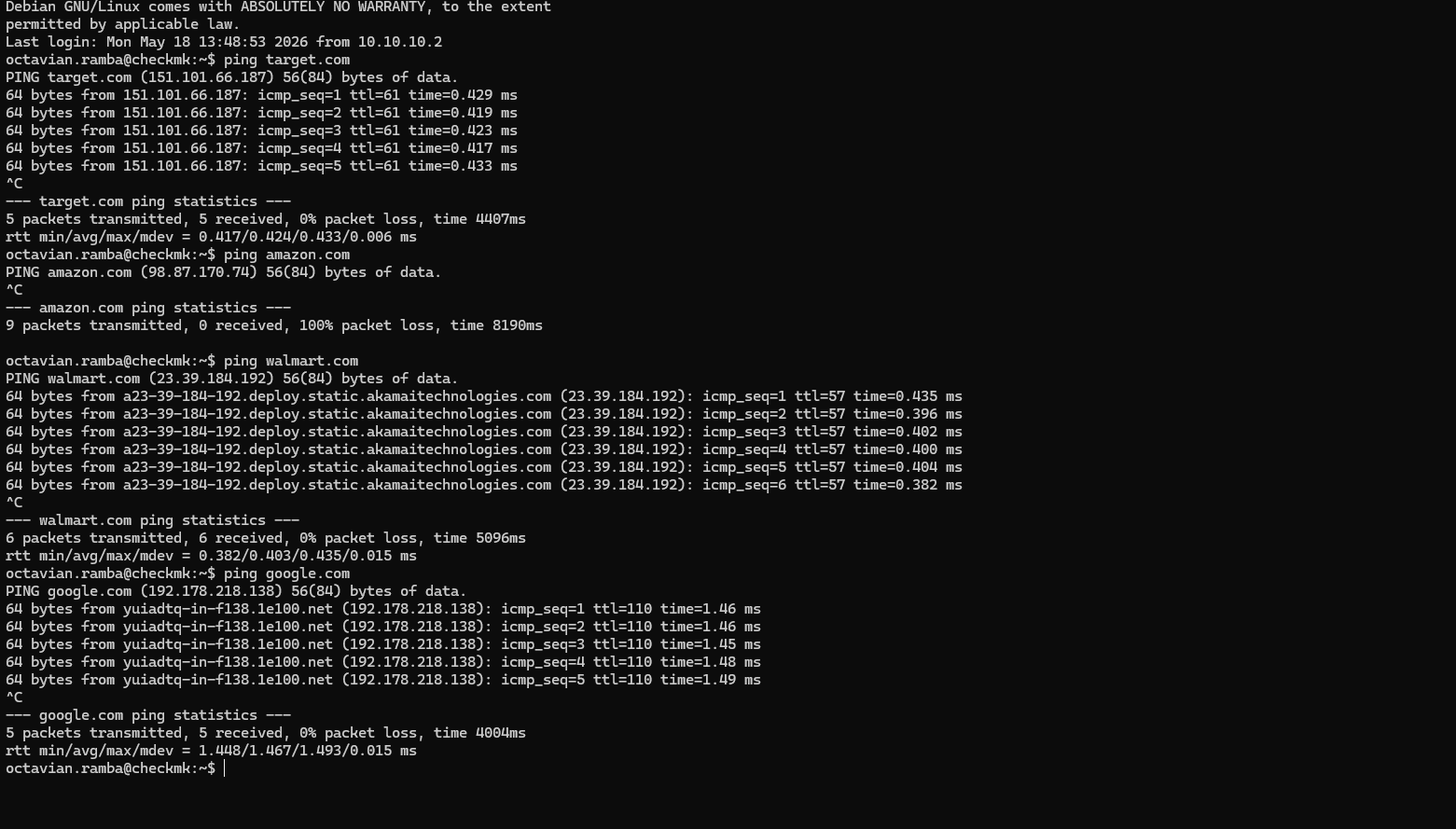
Live latency check from our newly opened datacenter in Dallas showing <1ms response time to Walmart, Amazon, and Target. The faster the hop, the faster every request lands, which is the whole game on checkouts, queue entries, and high-demand drops.
❌ Our limitations
HTTP(S) only – no SOCKS5 or UDP. If your setup needs SOCKS5, HypeProxies may not work.
USA only – limited to the USA currently. But it will soon be expanding to other regions as well.
Use this if you need: Sneaker botting, high-speed retail automation, price monitoring or data collection with USA ISP IPs and sub-100ms response times.
2. NodeMaven
NodeMaven offers private ISP proxies with static residential IPs, unlimited traffic, and UDP support. Pricing starts at $2.99/IP on 30-day plans, with 90-day plans also available. IPs are quality-checked before use and backed by a replacement or refund guarantee.
✅ Pros
Private dedicated IPs - no shared or semi-dedicated access, reducing bad-neighbor risk compared with shared ISP plans.
Fast performance - under 0.1s response time, built for time-sensitive tasks like ticketing, sneakers, e-commerce, and automation.
Unlimited traffic - pricing is per IP, not per GB, so costs stay predictable for high-bandwidth workflows.
UDP support - improves compatibility with modern platforms using HTTP/3, QUIC, and WebRTC.
Quality guarantee - IPs are pre-validated for clean history, low fraud risk, and correct geolocation.
Free replacements – an IP swap available via the dashboard.
❌ Cons
Country-level targeting only - no city, ZIP, ASN, or carrier targeting listed in the product source.
Limited country coverage - ISP proxies are available in 10 countries: Brazil, France, Germany, Hong Kong, Italy, Poland, Romania, Turkey, the United Kingdom, and the United States.
Smaller ISP proxy pool - NodeMaven focuses on quality-checked IPs from premium ISPs rather than maximizing raw pool size.
Use this if you need: Private high-quality ISP proxies for multi-accounting, e-commerce, ticketing, sneaker workflows, affiliate marketing, crypto wallets, or 24/7 automation.
3. Massive
Massive is a US-based proxy provider offering high-speed static ISP proxies with IPs on AT&T's ASN. Pool size is 20K+ IPs. Pricing starts at $30 for 10 IPs ($3/IP).
✅ Pros
High-speed & reliability – second-fastest. 0.09s response time with 100% infrastructure success rate.
Ethical compliance – GDPR, CCPA, SOC 2 Type I, and AppEsteem certified.
Unlimited usage – no caps on concurrent sessions or bandwidth on all plans.
Volume discounts – pricing drops to ~$2.00/IP at 50 IPs and $1.80/IP at 100 IPs.
❌ Cons
High entry price barrier – at $3/IP, Massive costs more than Oxylabs ($1.60/IP) or HypeProxies ($1.30/IP).
US-only coverage – no Canadian or international IPs.
Small pool size – 20K+ IPs limit capacity for large-scale operations.
Use this if you need: US-only operations with fast compliant proxies for price tracking, SEO monitoring, or eCommerce.
4. Oxylabs
Oxylabs offers self-service ISP plans starting at $16 for 10 IPs ($1.60/IP) across 17 countries. The entry tier is semi-dedicated (shared with up to 3 users). Dedicated IPs are also available.
✅ Pros
Unmetered bandwidth – no traffic caps on the pay-per-IP plan.
Near-perfect stability – 99.98% infrastructure success rate, backed by a 99.9% SLA.
Tier 1 ASNs – IPs sourced directly from major consumer ISPs (Comcast, BT Group, Lumen, Orange, and Cox Communications).
Enterprise compliance – ISO 27001 certified. GDPR and CCPA compliant.
❌ Cons
Undisclosed pool size – impossible to assess subnet diversity and availability before purchasing.
Session limits after 50GB – the fair usage policy reduces concurrent sessions from 100 to 10 after 50GB of traffic per IP per month. If you run high-concurrency scrapers, you will reach this limit mid-month and your throughput will drop by 90%.
Semi-dedicated entry – sharing IPs introduces bad-neighbor risk (another user's activity could get the IP blacklisted).
Use this if you need: High-bandwidth web scraping with premium ASNs and unlimited traffic.
Know More: How HypeProxies is A Better Alternative to Oxylabs for ISP Proxies
5. NetNut
NetNut operates a large proxy pool via a rotating gateway, with IPs sourced directly from ISPs. The pool includes 1M+ ISP IPs (per NetNut) under a traffic-based pricing model, starting at $350 for 20GB ($17.50/GB).
✅ Pros
One-hop connectivity – traffic routes directly through ISPs (via DiViNetworks), not through end-user devices.
Precise targeting – the gateway lets you target specific cities, states, and ASNs dynamically. Included in all plans.
High uptime – 99.99% network availability guarantee.
❌ Cons
Traffic-based pricing – NetNut charges by the GB rather than per IP. Most competitors offer unlimited bandwidth on dedicated IPs.
Limited support hours – instant chat is business hours only. Email support is available 24/7.
No ZIP targeting – country, state, and city level only. ASN targeting is available on all ISP plans.
Use this if you need: Rotating ISP-grade IPs with broad geographic coverage and high stability.
Know More: See How HypeProxies is Compared Against NetNut.
6. Decodo
Decodo (formerly Smartproxy) offers ISP proxies in 3 formats under one product line. Shared ISP plans start at $4.70 for 10 IPs ($0.47/IP).
✅ Pros
High stability – 100% infrastructure success rate with a 99.99% uptime guarantee.
3 proxy formats – shared lists (cheapest option), dedicated IPs (private access), or rotating pools.
Low entry barrier – $0.47/IP (via shared list) is lower than Oxylabs ($1.60/IP) or Rayobyte ($5.00/IP).
❌ Cons
Fair usage throttle – for dedicated ISP proxies, concurrent threads drop from up to 2,000 to 10 after 100GB of traffic per IP (and 10TB total subscription traffic) for the rest of the billing cycle. If you pull heavy payloads (images, full HTML with assets), you can hit this faster than you expect.
No city targeting – country-level filtering on shared and dedicated lists. City-level targeting requires the residential pool.
Semi-dedicated entry – the self-service plan is shared with other users, introducing the same bad-neighbor risk as Oxylabs' shared tier.
Dedicated price jump – a private proxy with unlimited bandwidth costs $10 for 3 IPs ($3.33/IP). That is roughly 7x the shared tier price.
Use this if you need: Scalable testing and production. Start with cheap shared IPs for testing, then upgrade to dedicated for unlimited traffic.
7. Webshare
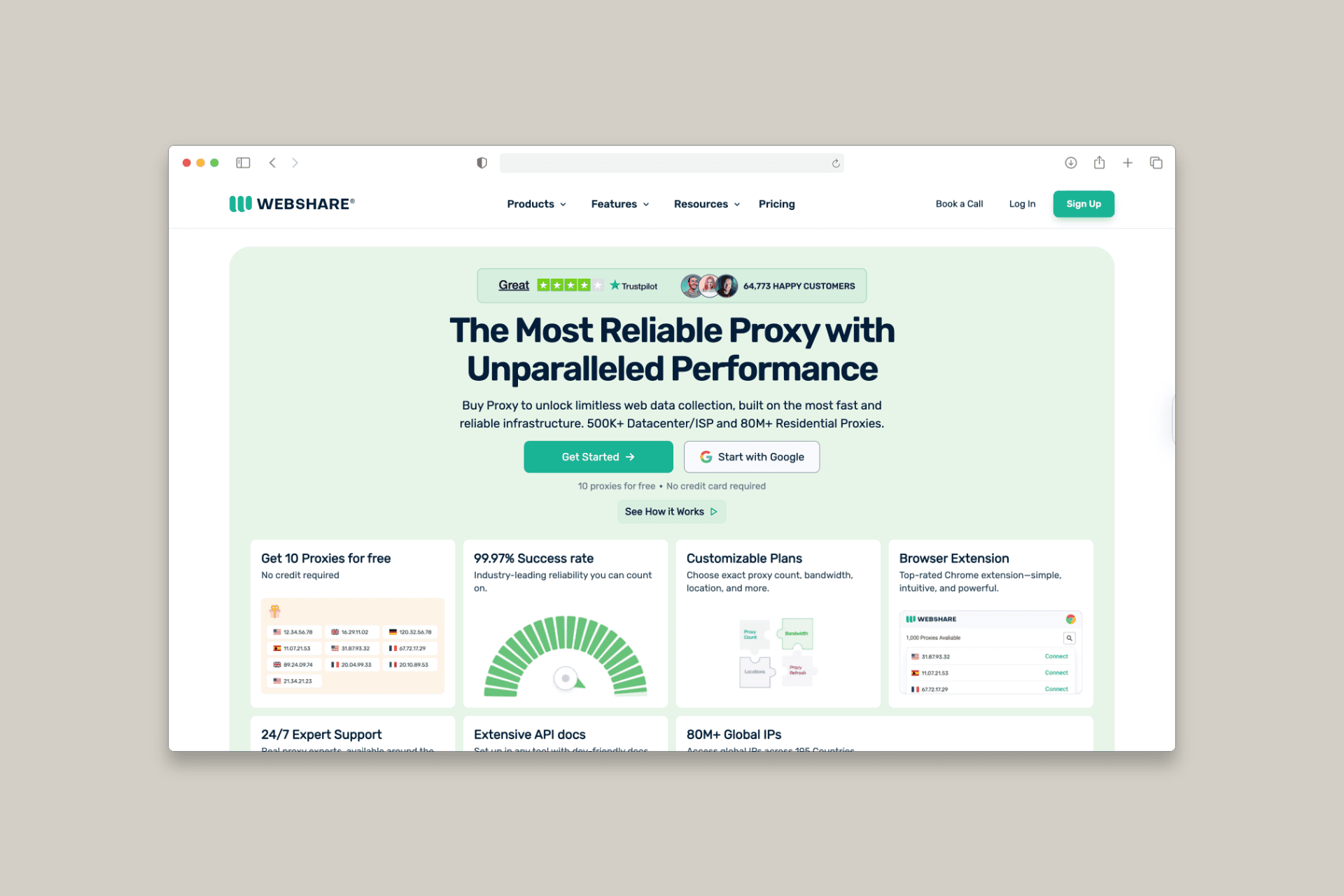
Webshare offers budget static ISP proxies starting at $18.50/mo for 20 shared IPs ($0.30/IP plus bandwidth) on monthly billing. Private ISP proxies (fewer users per IP) are available at $0.53/IP.
✅ Pros
Lowest entry price – most affordable shared ISP proxies.
Customizable plans – you can configure IP count, bandwidth, and refresh rate. 10 free manual replacements per month and optional on-demand rotation.
API access – programmatic controls and instant self-service setup. No sales calls needed.
❌ Cons
Slower performance – 0.42s response time, behind sub-0.2s category leaders.
Shared entry tier – the $0.30/IP plan is shared with 3 or more users total. Higher risk of IP abuse and blocks.
Fair usage bandwidth – the base plan advertises unlimited bandwidth subject to a fair usage policy. Check the current thresholds before committing to high-volume workloads.
Country-level targeting only – no city or ASN filtering.
Use this if you need: Budget testing or low-volume data collection where cost per IP matters more than speed.
Know More: How HypeProxies Can Be A Better Option Over Webshare ISP Proxies
8. IPRoyal
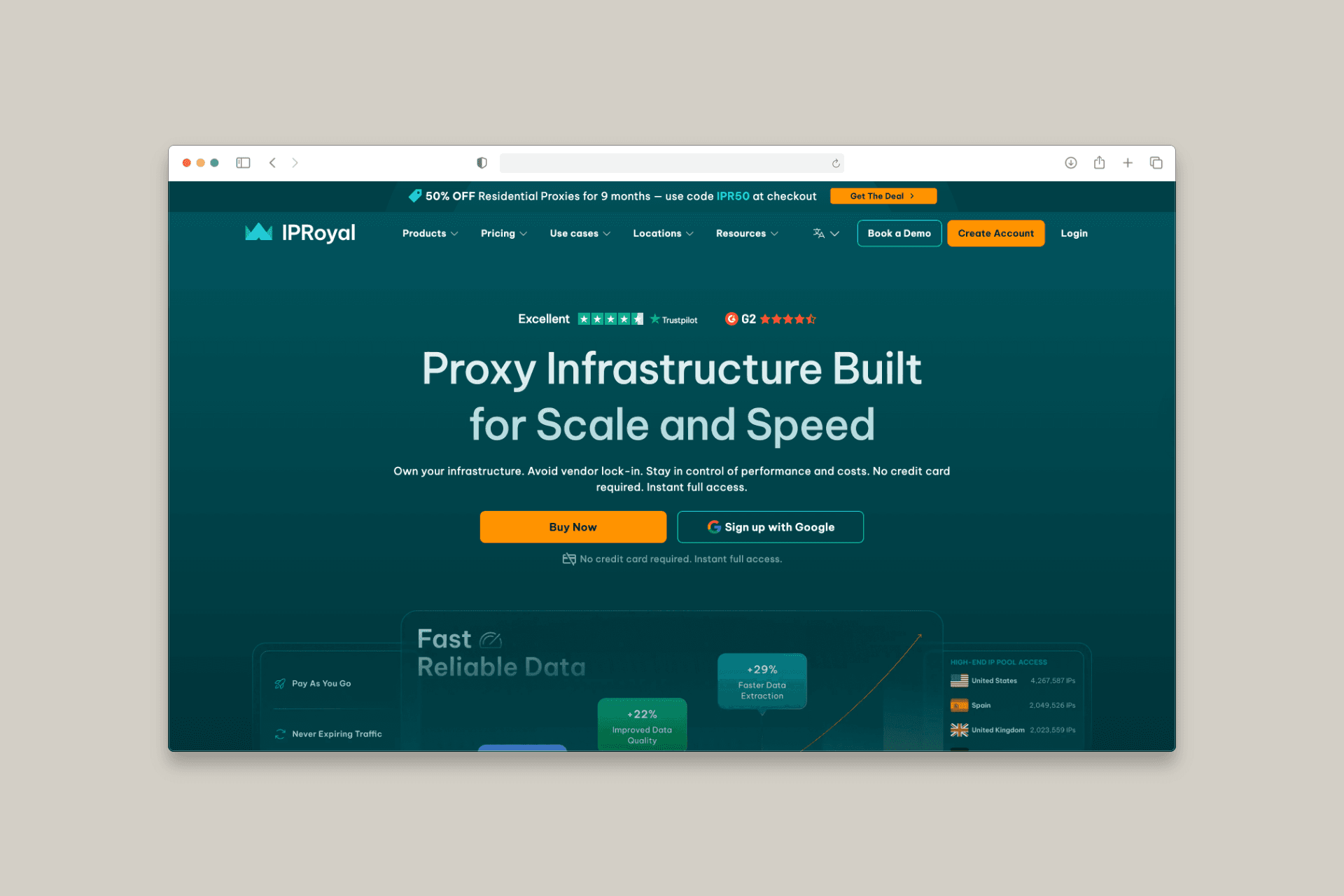
IPRoyal is a mid-range ISP proxy provider with a 500K+ IP pool across 31+ countries. Static ISP proxies are priced by duration, starting at $2.70/IP monthly.
✅ Pros
Affordable global reach – $2.70/IP (lower for longer terms). One of the cheapest options for dedicated ISP proxies with international coverage.
Wide geo-targeting – country, state, and city selection across the full pool.
Unlimited usage – no caps on traffic or concurrent sessions on all ISP plans.
Full protocol support – HTTP(S), SOCKS5, and UDP.
❌ Cons
Mid-range speed – 0.46s response time – over 2x slower than the top 3.
Lower success rate – 94.75% infrastructure success rate – roughly 1 in 20 requests fails before reaching the target site.
Limited availability – popular locations can sell out.
Infrequent refresh – limited free IP replacements.
Use this if you need: Global coverage on a budget. Dedicated IPs with unlimited traffic across 31+ countries.
9. Proxy-Seller
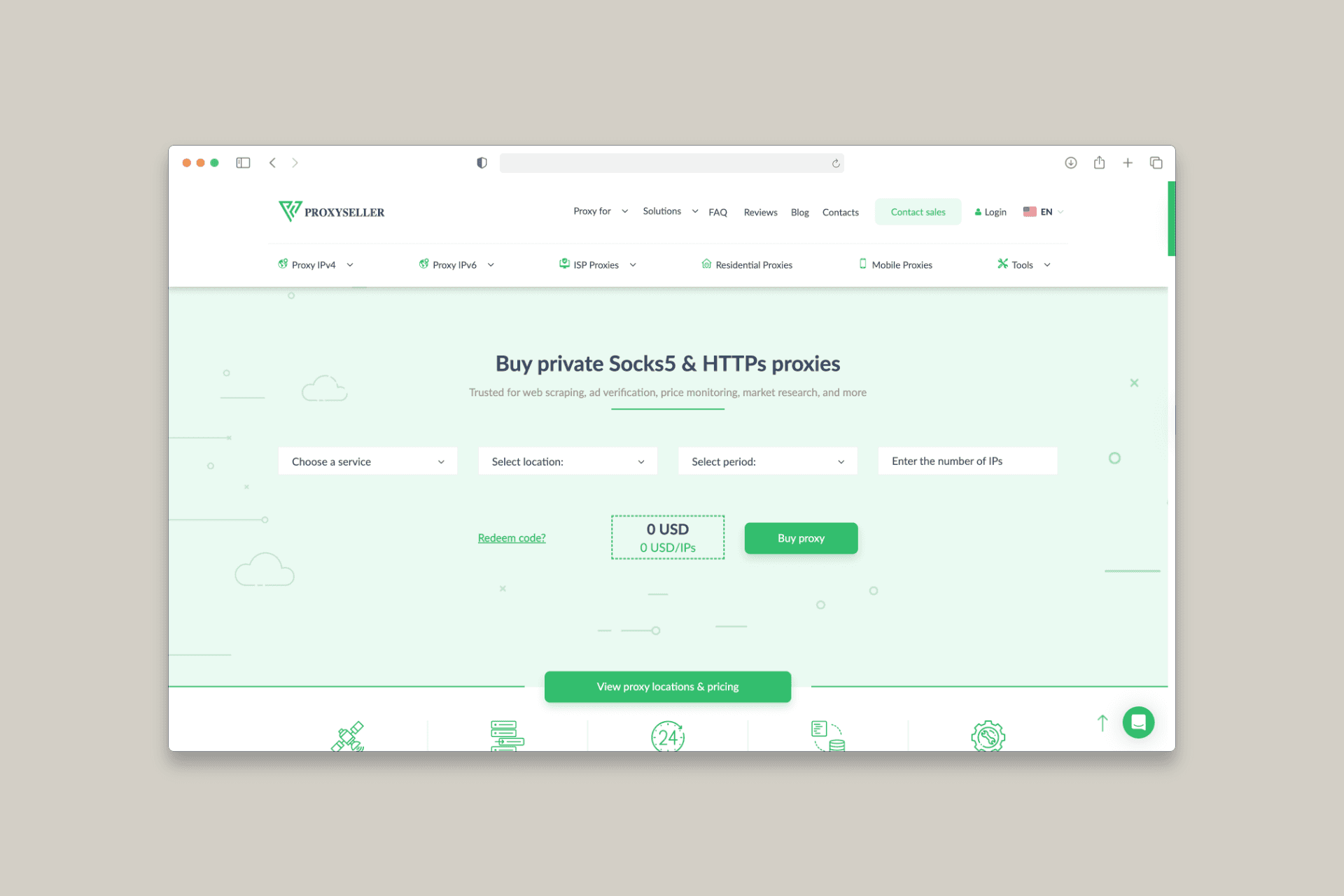
Proxy-Seller offers dedicated ISP proxies across 20+ countries with flexible subscription periods from 1 week to 1 year. ISP proxies start at $1.50/IP weekly for short-term dedicated use.
✅ Pros
Flexible billing periods – weekly subscriptions starting at $1.50/IP (as few as 1 IP).
Wide global coverage – dedicated ISP IPs with per-country selection.
Free monthly replacements – swap IPs at no extra cost.
❌ Cons
Slow infrastructure – 0.67s response time.
Lower success rate – approximately 90% infrastructure success rate – 1 in 10 requests drops at the infrastructure level alone. Add error handling.
Static-only product – no rotating ISP pool option. If you need automatic IP rotation, consider NetNut or Decodo.
Post-purchase city targeting – selection requires contacting support after you buy.
Use this if you need: Short-term dedicated proxies. Weekly billing works well for temporary tasks like ad verification or account protection.
10. Bright Data
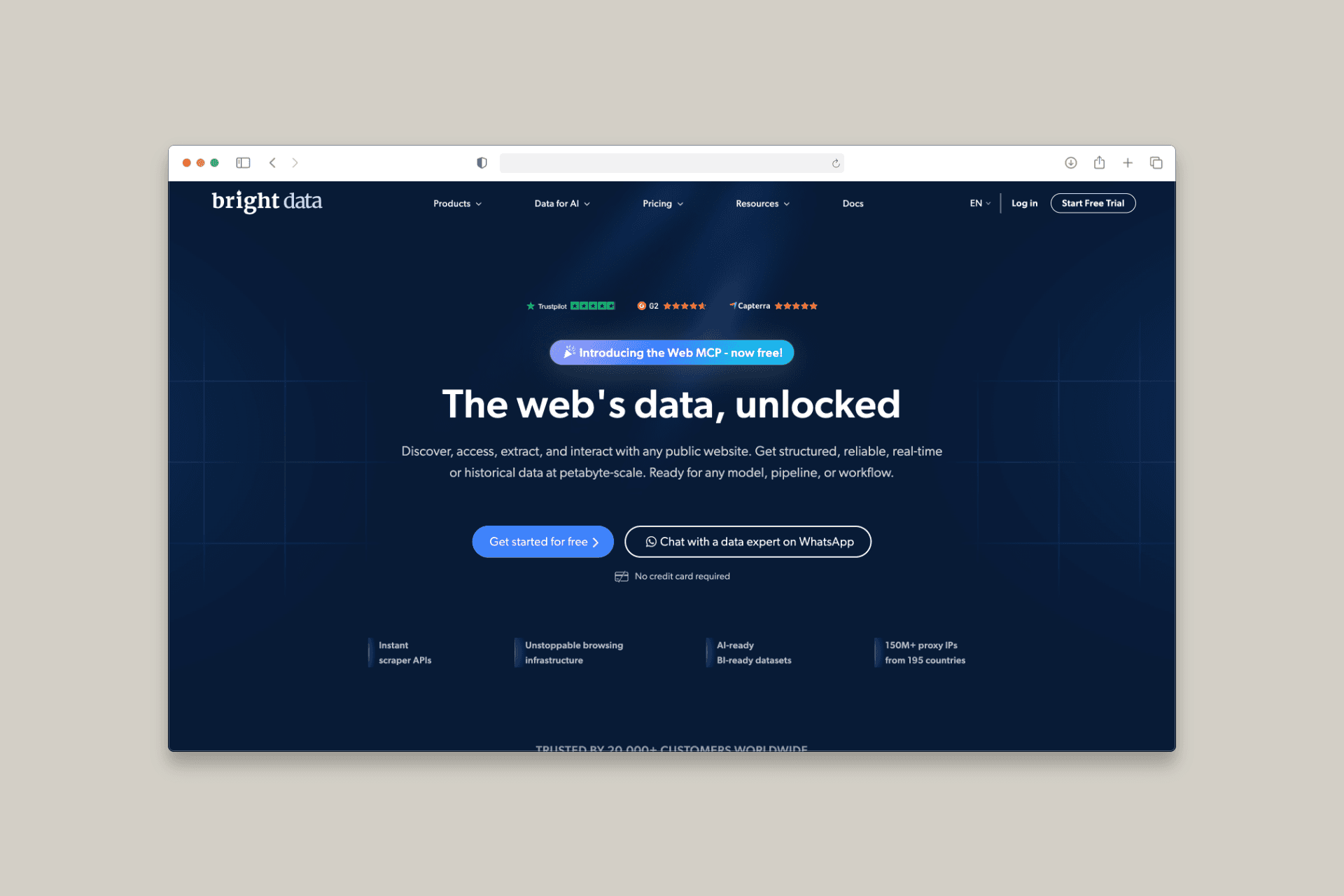
Bright Data operates 1.3M+ IPs across 50+ countries with advanced management tools. ISP proxies are available via 2 billing options: pay-per-GB ($15/GB) or pay-per-IP (shared at $1.80/IP, dedicated at $3.50/IP).
✅ Pros
No expiration or forced refresh – IPs persist across billing cycles, including renewals.
Enterprise-grade compliance – certified ISO 27001 and SOC 2 Type II, plus GDPR/CCPA compliant.
Dual billing models – choose pay-per-GB for variable workloads or pay-per-IP for predictable ones. No other provider offers both.
❌ Cons
Performance data may be outdated – the 1.12s response time and 98.96% success rate may reflect residential benchmarks, not ISP-specific performance.
Premium pricing – at $5–8/GB or $1.80–$3.50/IP, Bright Data costs more than most providers.
Complex platform – you need to set up zones, configure permissions, and manage proxy settings through their dashboard before you can get a proxy list.
Mandatory KYC (Know Your Customer) – strict identity verification needed for most products. Good for ethical compliance but adds friction for individual users or freelancers.
Use this if you need: Enterprise-level compliance (ISO 27001, SOC 2), lifetime IP retention, and a large ISP pool across 35 countries.
Know More: See how Bright Data compares with Oxylabs and HypeProxies on ISP proxy infrastructure
How To Choose The Best ISP Proxies For Your Needs
Evaluation Criteria | Top providers | Key metric |
|---|---|---|
Maximum speed | HypeProxies, Massive | 0.06s, 0.09s (both with 100% infrastructure success rate) |
Best reliability | HypeProxies, Massive, Decodo, NetNut | 100% infrastructure success rate |
Lowest cost | Webshare, Decodo, Proxy-Seller | $0.30/IP/mo (shared), $0.47/IP/mo, $1.50/IP/week |
Largest IP pool | NetNut, Bright Data, IPRoyal | 1M+, ~750K ISP, 500K+ IPs |
Global coverage | Bright Data, IPRoyal, Proxy-Seller | 35, 31+, 20+ countries |
USA (fastest) | HypeProxies, Massive | 500K+ USA ISP IPs |
Unlimited bandwidth | HypeProxies, Massive, Rayobyte, IPRoyal | No per-GB charges. Oxylabs and Decodo also have no per-GB billing but throttle concurrency after fair usage thresholds (Oxylabs: 50GB/IP/month; Decodo: 100GB/IP) |
Enterprise compliance | Bright Data, Oxylabs, HypeProxies, Massive | ISO 27001, SOC 2 Type II (BD); ISO 27001 (Oxylabs); SOC 2 Type I (Massive) |
Most people use ISP proxies for web scraping, sneaker botting, price monitoring, ad verification, SEO rank tracking, or account management. Which provider works best depends on where your targets are and how bandwidth is billed.
If your operations are focused on the US, speed and IP cleanliness matter more than pool size, HypeProxies can be the right fit for you. Our ISP IPs cover all 50 US states, with no per-GB charges. If you need IPs across 20+ countries, then look at providers with wider geo-coverage.
One thing to check before buying: how the provider charges for bandwidth. Some charge per GB, which gets expensive if you are running scrapers at high concurrency. Others (including us) charge per IP with unlimited bandwidth, so you know the cost upfront.
If you are buying for an enterprise, check compliance certifications (ISO 27001, SOC 2, GDPR/CCPA) on the provider's website before shortlisting.
Before you buy from any provider, run the 3 verification checks in the next section on a small batch of IPs, you can also compare the ISP proxies providers on your shortlist before testing them. You can go for free trial as well.
3 Steps To Verify ISP Proxies Quality Before You Decide To Buy
No matter which provider you pick, there are some pre checks you can do. Some 'residential' and 'ISP' proxy pools are datacenter IPs with better marketing. Google's disruption of a major proxy network showed what happens when IP sourcing is not transparent. These mislabeled proxies work fine in demos. Then when you start scaling these proxies start flagging you.
1. Fraud Score Check
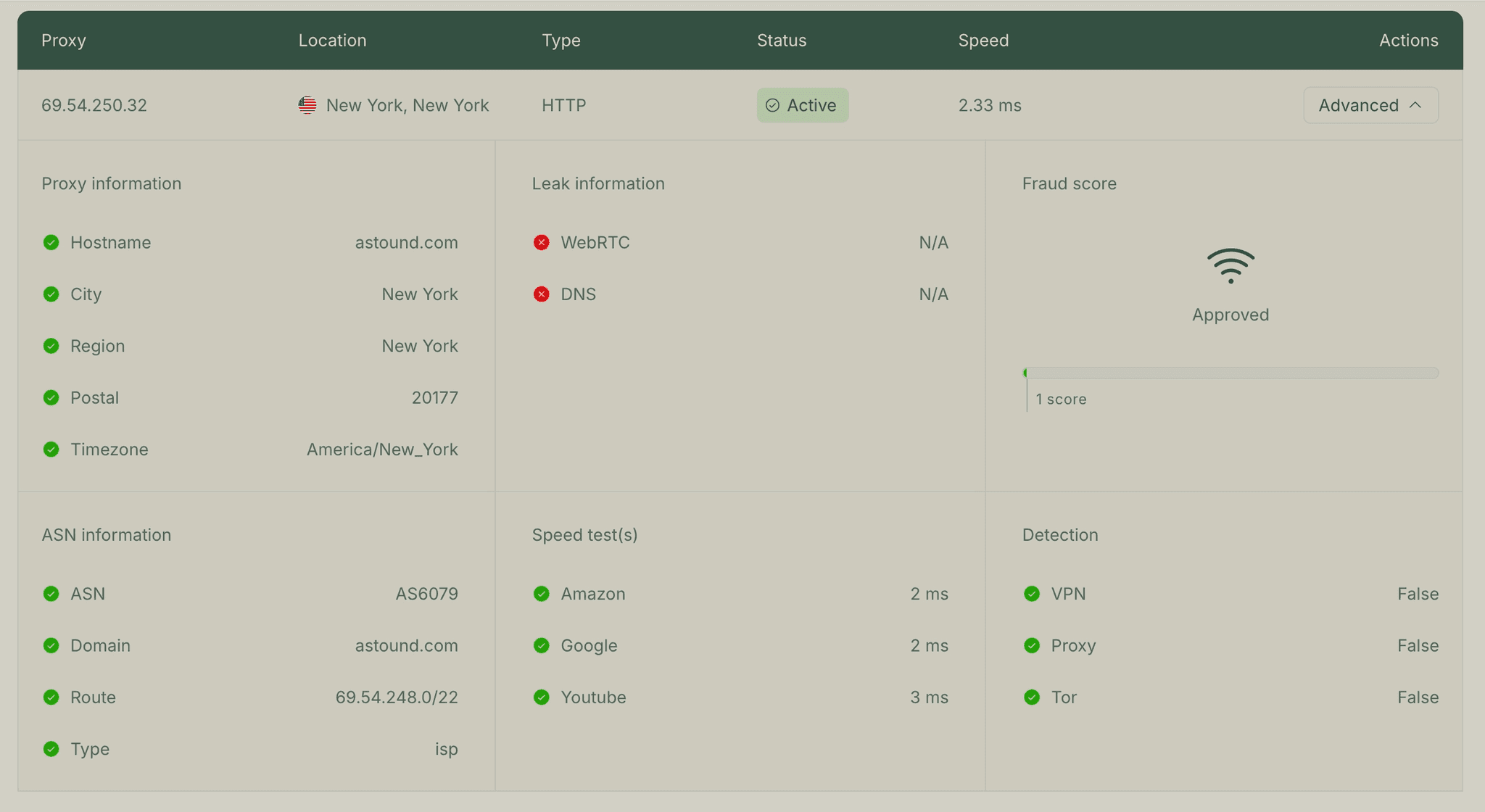
Run the IPs through fraud detection services like IPQualityScore, MaxMind, or Scamalytics (each uses different scoring). Real residential and ISP IPs should score low (under 30 on most services). If you see high fraud scores across multiple services, you are probably on a datacenter pool that someone renamed.
2. Reverse DNS and ASN lookup
Check the ASN of each IP using a free ASN lookup tool (e.g., ipinfo.io or bgp.he.net). Legitimate ISP proxies should have their IP ranges registered under ISP ASNs like Comcast, Verizon, AT&T, Frontier, Vodafone, and BT. Even though the physical servers are hosted in datacenters, the IP blocks should be owned by ISPs – not hosting companies like AWS, DigitalOcean, or OVH. If the ASN points to a hosting provider, you are looking at a relabelled datacenter proxy.
3. Geolocation consistency
Check the same IP across multiple geolocation services. Real ISP IPs should show consistent location. If your 'residential' IP shows Texas on one service and Germany on another, there is a problem. Many ISP proxies (including ours) are physically hosted in datacenters with geolocation tagging to appear in different states.
These checks take 10 minutes per provider and can save weeks of debugging at production scale. You can run all three checks (fraud score, ASN lookup, and geolocation) using our free proxy checker too.
Conclusion
Every provider on this list trades something for something else. Speed costs coverage. Low price costs exclusivity.
Before you buy: Run the 3 verification tests (fraud score, ASN lookup, geolocation consistency) on a small batch of IPs. If you want to test ours, you can sign up or go for a free trial.
*Pricing, IP counts, success rates, and performance data are based on information available as of December 2025 from Proxyway's Proxy Market Research 2025 and official provider websites. Figures are subject to change by respective providers without notice. Always verify current terms on the provider's official website before purchasing.
FAQs
Where can ISP proxies be used?
ISP proxies are used for web scraping, sneaker botting, price monitoring, ad verification, SEO rank tracking, account management, and ticketing. They work well on sites protected by anti-bot systems like Cloudflare, Akamai, and HUMAN because IP databases classify them as residential. See our full list of ISP proxy use cases for more details.
If I get more rotating residential IPs for cheaper, why should I use ISP proxies?
Because residential IPs rotate, you lose the session. Every new request can get a new IP, which means you cannot hold a login, maintain a cart, or keep a persistent session on any platform. ISP proxies are static, i.e. you keep the same IP for as long as you need it. They also run on datacenter hardware, making them significantly faster and more reliable.
Is ISP good for ticketing & botting?
Yes. Ticketing sites like Ticketmaster and AXS run anti-bot systems that flag datacenter IPs and rotating residential IPs that change mid-session. ISP proxies run at datacenter speeds but are classified as residential, so they hold the session through the entire checkout. For sneaker botting, same thing, sites like Nike SNKRS and Shopify drops need fast, clean, static IPs that do not get flagged mid-flow. We cover exactly why that ASN check comes first in ISP vs datacenter proxies for ticket sites.
Why would I want static IPs? What is so good about having the same IP address?
Yes. Any proxy can get banned if overused or flagged by anti-bot systems. ISP proxies get banned less often than datacenter proxies because they carry real ISP classifications. The key factors: IP cleanliness (have previous users blacklisted the IP?), subnet diversity (are all your IPs in the same /24 subnet – 256 addresses?), and how many other people share the same IP. Practically dedicated ISP proxies with low fraud scores tend to have the lowest ban rates.
Why not just use rotating residential proxies since they are cheaper and rotate automatically?
Residential proxies are good for one thing: large-scale scraping where you need a different IP on every request across many countries. Outside of that, ISP proxies are better. They are faster (sub-100ms vs 1-5s), you get a dedicated IP on a real ISP ASN, and you control which IP is used for which task. Residential pools also tend to have lower success rates because the IPs come from real user devices that can go offline at any time.
Can I use ISP proxies for SEO scraping and rank tracking?
Yes. ISP proxies work well for scraping SERPs because search engines are less likely to flag them compared to datacenter IPs. For rank tracking, you need IPs in specific locations to see localized results. ISP proxies with state-level or city-level targeting let you check rankings as they appear to real users in those areas.
Will ISP proxies reduce account bans?
They reduce the risk, but they do not eliminate it. Account bans happen because of IP reputation, behavior patterns, and fingerprinting & not just IP type. ISP proxies help with the IP side: they carry real ISP classifications, have low fraud scores (if clean), and are not shared across hundreds of users like cheap residential pools. Dedicated ISP proxies give each account its own clean IP, which is the biggest factor in avoiding platform-level bans. But if your automation behavior is aggressive (too many actions per minute, identical patterns across accounts), you will still get flagged regardless of IP type.
When ISP Proxies Beat Residential Proxies
When you need the same IP across requests, fast response times, low detection on protected sites, or dedicated IPs not shared with other users. Residential proxies are better when you need IP rotation across many countries. For most other use cases, ISP proxies perform better.
Share on

$1 one-time verification. Unlock your trial today.
Stay in the loop
Subscribe to our newsletter for the latest updates, product news, and more.
No spam. Unsubscribe at anytime.