What Is Web Scraping Used For? The Operator's Guide to Bypassing Blocks
You're burning through proxy budgets, fighting a losing battle with CAPTCHAs, and your data feeds are unreliable because your scrapers keep getting shut down. Sound familiar?

Gunnar
Last updated -
Feb 4, 2026
Why Hype Proxies
This isn't just bad luck. It's the inevitable result of following outdated advice. Most guides define web scraping but leave you stranded when it comes to the operational reality of collecting data at scale. They won't tell you why your premium residential IPs get flagged in minutes or how a tiny variation in your TLS fingerprint is a dead giveaway to sophisticated anti-bot systems.
As proxy infrastructure operators, we see what works and what gets millions of requests blackholed every day. This guide explains what web scraping is actually used for and details the specific proxy infrastructure and operational logic required to win against modern anti-bot defenses.
What is Web Scraping?
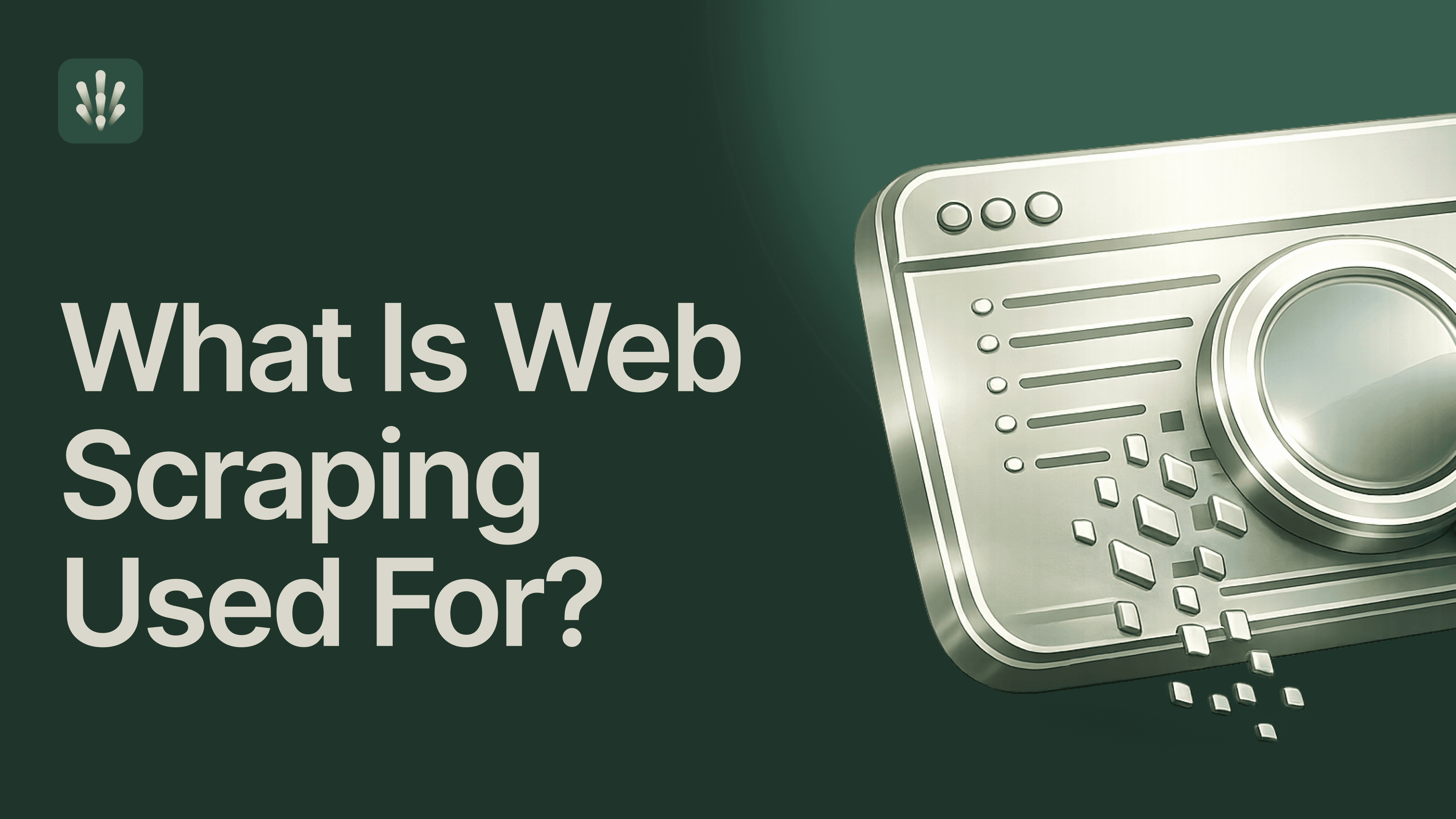
Web scraping is the automated process of extracting public data from websites. In practice, it's a constant battle against detection, where the goal is to make a bot mimic human behavior so convincingly that it can collect data without being blocked. Success isn't about parsing HTML; it's about managing identity, session integrity, and digital fingerprints at scale.
How Web Scraping Actually Works at Scale
At an operational level, web scraping is an exercise in evasion. The entire game hinges on one thing: making your infrastructure look like thousands of completely normal, unrelated users. This is where proxy rotation becomes your core strategy, but the way you rotate is what separates success from failure.
Rotation Methods: Tradeoffs and Failure Points
Per-Request Rotation: This model sends every single request through a different IP address. It's effective for anonymous, stateless tasks like scraping search engine results or aggregating product listings where each request is independent.
When it Fails: Using per-request rotation for any multi-step process is a disaster. If you switch IPs between adding an item to a cart and proceeding to checkout, you've just raised a massive red flag. The target's server sees an impossible user journey, and your session is terminated.
Session-Based (Sticky) Rotation: This is non-negotiable for complex workflows. A sticky session assigns a single IP for a set duration (e.g., 10 minutes), allowing your scraper to complete a sequence of actions from one consistent identity.
When it Fails: The primary pitfall is session expiry. If your scraping logic takes longer than the sticky session's lifetime, the IP will switch mid-workflow. This breaks the chain of events, corrupts your data, and forces you to start over. You must engineer your scraper to complete its task within the session window provided by your proxy provider.
Concurrency, Rate Limits, and IP Pool Quality
Firing off too many concurrent requests from a single IP is the most common mistake and an easy way to get blocked. But sophisticated targets don't just watch individual IPs; they analyze traffic at the subnet (ASN) level.
This is a critical operational detail. If you're using a cheap provider whose IP pool consists of a few overused subnets, your entire operation can be blacklisted because another user on the same subnet was too aggressive. High-quality IP pools with broad ASN diversity aren't just a marketing claim—they are fundamental to your success rate.
Proxy Types & Tradeoffs for Real-World Scraping
Choosing the right proxy is about matching the tool to the target's defenses. A proxy that's perfect for one task will get you instantly banned on another.
Use Case | What Works & Why | What Fails & Why | Cost vs. Success Tradeoff |
|---|---|---|---|
E-commerce Price Tracking | Large Residential Proxy Pools provide the IP diversity needed to scrape thousands of product pages without triggering volume-based blocks. They mimic real shopper traffic. | Datacenter Proxies are easily fingerprinted by their ASN and blocked by major e-commerce platforms. A small IP pool gets flagged for unusual activity almost immediately. | High success rate justifies the cost of residential proxies. Datacenter proxies are a false economy leading to failed jobs. |
SEO & Ad Verification | Geo-Targeted Residential Proxies are mandatory. They let you see search results and ads exactly as a user in a specific city would, ensuring data accuracy. | Datacenter or non-targeted proxies will be served cached or irrelevant content. The data collected is useless for local SERP or ad placement analysis. | The premium for precise geo-targeting is non-negotiable. Bad data is more expensive than the right proxies. |
Sneaker & Ticket Botting | Low-Latency Static Residential or ISP Proxies are critical. Speed is paramount, and a consistent, reputable IP is needed to pass checkout without being flagged. | High-latency or Rotating Residential Proxies are a disaster. Rotation mid-purchase is a giant red flag that gets transactions instantly blocked. | Highest cost per IP, but it's the only way to compete. Failure means zero return, so the proxy cost is part of the entry fee. |
Social Media Automation | High-quality Mobile or Residential Proxies are the only option. They provide stable, long-term sessions from real devices, which is critical for account trust. | Datacenter Proxies are instantly banned by social networks. Their algorithms are built to detect and block traffic from commercial hosting ASNs. | The cost is high, but necessary to avoid losing valuable accounts. Datacenter proxies guarantee account suspension. |
Why You’re Still Getting Blocked (It's Not Just Your IP)
If you've got a premium proxy pool but are still fighting blocks, your strategy is outdated. Modern anti-bot systems have moved far beyond simple IP blacklisting. Success requires managing your entire digital footprint.
Here are the real reasons your scrapers are failing:
Browser Fingerprinting & Header Entropy
Every browser sends a unique combination of data points that create a browser fingerprint. This goes deeper than the user agent. It’s a mix of your installed fonts, screen resolution, browser plugins, and WebGL rendering capabilities. If an anti-bot system sees thousands of requests from different IPs that all share the exact same fingerprint, it's a dead giveaway of a botnet. Real user traffic is diverse; your scraping fleet must be, too.
TLS/Client Hints
Your scraper can reveal itself before sending its first HTTP request. The initial TLS handshake for establishing an HTTPS connection is different for a Python requests library versus a real Chrome browser. Anti-bot systems analyze these initial packets (client hints). If the TLS signature doesn't match a standard consumer browser, you're blocked before you even request the page.
ASN Reputation
Anti-bot services don't just ban single IPs; they often blacklist the entire Autonomous System Number (ASN) or subnet it belongs to. This is why cheap datacenter proxies are useless against protected targets. Their ASNs are already on a watchlist, flagged as non-residential and untrustworthy.
Automation Tool Detection
Headless browsers like Puppeteer and Playwright leave traces. Anti-bot scripts can detect the presence of WebDriver and other automation-specific JavaScript properties. A vanilla headless browser screams "I am a bot" to any modern detection system. You need to use hardened or stealth versions of these tools to stand a chance.
Bad Rotation Logic
Your rotation strategy can be a huge red flag. A user adding an item to their cart from a New York IP and proceeding to checkout one second later from a Los Angeles IP is impossible behavior. This gets you flagged instantly. Effective scraping requires intelligent, session-based rotation that mimics a plausible user journey. If you suspect this is happening, learn why your proxies got banned.
Real-World Use Cases (With Operational Constraints)
Generic lists of "what web scraping is used for" are useless without operational context. Here's what it actually takes.
E-commerce and Price Intelligence
Why proxies are required: To scrape thousands of product pages across numerous retailers without triggering volume-based IP or subnet bans.
What actually works: A massive pool of rotating residential proxies. You must distribute requests across thousands of unique IPs to mimic organic shopping traffic.
What fails at scale: Datacenter proxies. Their ASNs are pre-emptively blocked by all major e-commerce platforms. Using a small pool of any proxy type will also fail due to rate-limiting.
What teams underestimate: The sophistication of anti-bot measures on product detail pages and at checkout. Fingerprinting is aggressive here.
SEO and Ad Verification
Why proxies are required: To view search engine results pages (SERPs) and ad placements from the perspective of a user in a specific geographic location.
What actually works: Geo-targeted residential proxies. You need to specify the country, state, and even city to get accurate local data. Mobile proxies are even better for emulating mobile search.
What fails at scale: Using datacenter IPs or proxies from the wrong location. You'll be served cached or completely irrelevant results, making your data worthless.
What teams underestimate: How granular geo-targeting needs to be for accurate local SEO analysis. Country-level is often not enough. For a deeper look, explore these common web scraping use cases.
Alternative Data for Finance
Why proxies are required: To aggregate data from news sites, public filings, social media, and forums to generate trading signals without being blocked for high-frequency requests.
What actually works: A combination of ISP proxies for high-speed, low-latency access to APIs and residential proxies for scraping unstructured web content.
What fails at scale: Relying solely on free or cheap proxies, which are unreliable and can compromise data integrity—a fatal flaw in financial applications.
What teams underestimate: The need for 100% data uptime and accuracy. A single failed scrape can corrupt a time-series dataset and lead to bad investment decisions.
How to Choose the Right Scraping Setup
Picking the right infrastructure is an operational decision, not a pricing one. It's a constant tradeoff between cost, reliability, and success rate.
Decision Rules for Proxy Selection
Is the target protected by advanced anti-bot (Cloudflare, Akamai)? → You need high-quality residential proxies with clean subnets. Datacenter proxies will fail.
Does the task require completing a multi-step workflow? → You need a provider with reliable sticky session control.
Is speed the most critical factor (e.g., sneaker botting)? → You need low-latency static residential or ISP proxies.
Is the data geo-specific? → You need residential proxies with granular city-level targeting.
When NOT to Use Rotating Proxies
Constant rotation is counterproductive for managing accounts or any task requiring a consistent identity. For social media automation or managing e-commerce seller accounts, you must use a static residential or ISP proxy. Hopping IPs will trigger security alerts and get your accounts locked or banned.
Understanding the underlying mechanics is key. Learning how to build a proxy server offers valuable insight, and our guide to the different types of proxy servers can help you map the right tool to the job.
FAQs From the Trenches
We field questions from engineering teams daily. Here are the real answers to common problems.
Are proxies and VPNs the same tool for scraping?
No. They are fundamentally different. A VPN is for personal privacy, routing all of your device's traffic through a single server. For scraping, this means all requests come from one IP—an easy target to block. Proxies operate at the application level, allowing you to manage thousands of unique IPs for individual requests. For data collection, proxies are the only viable tool.
What's the risk of using free proxies?
Using free proxies for any serious project guarantees failure. They are slow, unreliable, and already blacklisted on any target that matters. The real danger is security: free proxy operators often monetize by intercepting your data, injecting malware, or selling your bandwidth. The risk is not worth the zero cost.
Is web scraping legal?
Scraping publicly available data is generally legal in most jurisdictions, but it's a complex area. The golden rule is to be an ethical operator. Never scrape personal data (PII), respect robots.txt directives, avoid copyrighted content, and design your scrapers to avoid overwhelming a target's servers. When in doubt, consult legal counsel.
When are rotating proxies the wrong tool?
Use static, not rotating, proxies for any task that requires a stable identity over time. This includes managing social media accounts, maintaining a consistent session on an e-commerce site, or any workflow where changing your IP address would be considered suspicious user behavior.
How much should I expect to pay for reliable proxies?
Cost varies wildly based on type and quality. Datacenter proxies are cheap but have a low success rate. Expect to pay significantly more for high-performance residential or mobile proxies. View it as an infrastructure cost: if your scrapers have a 50% failure rate due to bad proxies, you are wasting 50% of your compute and engineering resources. Paying for better proxies often lowers your total operational cost.
Ready to build a data collection pipeline that actually works? HypeProxies provides the high-performance residential and ISP proxy infrastructure engineered for success against the toughest targets.
Share on

$1 one-time verification. Unlock your trial today.
Stay in the loop
Subscribe to our newsletter for the latest updates, product news, and more.
No spam. Unsubscribe at anytime.