What are isp proxies and why they boost online tasks
ISP proxies are a fascinating beast, blending the raw speed of datacenter proxies with the legitimacy and trust of residential proxies. What does that mean in practice? You get an IP address that’s officially registered to a real Internet Service Provider (like Comcast or AT&T), but it’s physically hosted on a screaming-fast datacenter server. This clever combination gives you a stable, reputable, and incredibly quick connection for your most demanding online jobs.

Gunnar
Last updated -
Why Hype Proxies

Understanding ISP Proxies in Simple Terms
To really get what makes ISP proxies special, let's ditch the tech jargon for a minute and talk about cars. Imagine you need a vehicle for a high-stakes mission that requires both insane speed and the ability to drive through a city without anyone batting an eye.
Datacenter Proxies are your Formula 1 race car. They're unbelievably fast, but the moment you take one on a public road, it sticks out like a sore thumb. Cops (or in our case, websites) will spot it and shut it down almost instantly.
Residential Proxies are like your average family sedan. It blends in perfectly with traffic and never draws suspicion. It's great for everyday errands, but it just doesn't have the performance you need to win a race.
This is exactly where ISP proxies pull ahead of the pack.
The Best of Both Worlds
An ISP proxy is the equivalent of a high-performance supercar that is completely street-legal. It has the blistering speed and rock-solid reliability of the race car, but to everyone else on the road, it looks like a normal, legitimate vehicle. You get all the performance without any of the unwanted attention.
This diagram breaks it down nicely, showing how the best traits of datacenter and residential IPs come together to create a powerful ISP proxy.
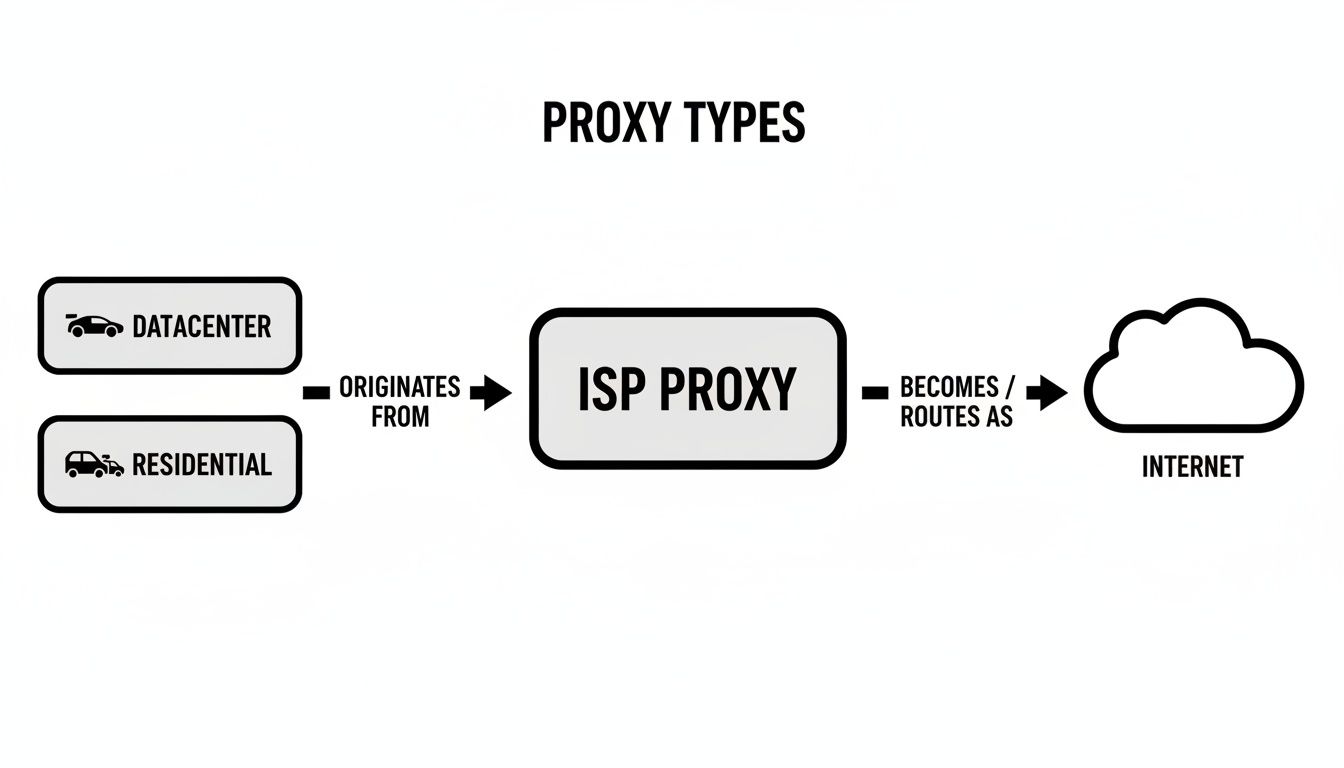
By mixing datacenter velocity with a legitimate ISP-backed address, you end up with a superior tool for serious work. It’s this hybrid nature that makes them the go-to choice for tasks where both speed and trust are non-negotiable, like copping limited-edition sneakers or scraping market data without getting blocked.
ISP Proxy At a Glance
To make it even clearer, here’s a quick side-by-side comparison of how ISP proxies stack up against their datacenter and residential cousins.
Attribute | ISP Proxies | Residential Proxies | Datacenter Proxies |
|---|---|---|---|
IP Source | Datacenter hosted, ISP registered | Real user devices (ISPs) | Cloud data centers |
Speed | Excellent (1 Gbps+) | Good (variable) | Excellent (1 Gbps+) |
Trust | Excellent | Excellent | Low |
Stability | Excellent (Static) | Fair (Rotating) | Excellent (Static) |
Cost | High | Medium | Low |
This table shows why ISP proxies command a premium price—they deliver top-tier performance on every key metric except cost, offering an unmatched combination of speed and trustworthiness.
How ISP Proxies Fit Into The Proxy Ecosystem
To really get what makes ISP proxies so special, it helps to see where they sit in the wider proxy family. The whole point of any proxy is simple: use a different IP address to mask your own. The real difference between the various types comes down to where that new IP address actually comes from.
On one side of the spectrum, you have datacenter proxies. These IPs are born in massive server farms and are famous for their raw, unthrottled speed and rock-solid stability. The catch? They're super easy for websites to spot as non-human traffic because their IPs belong to big hosting companies, not regular internet providers.
Then you have residential proxies. These use IP addresses that belong to real home internet connections, which makes them look completely legitimate to any website you visit. This authenticity is amazing for flying under the radar, but performance can be a real mixed bag—you're at the mercy of someone else's home network speed and whether they keep their device online.
Bridging The Performance Gap
ISP proxies were created to solve this annoying trade-off. You shouldn't have to choose between speed and legitimacy. They neatly bridge the gap by combining the best features of both datacenter and residential proxies into one powerhouse package.
An ISP proxy is physically located in a high-speed datacenter, but its IP address is officially registered under an Internet Service Provider. This gives it the raw power of a server and the trusted name of a residential connection.
This unique, hybrid setup is exactly why they're the go-to for demanding jobs. You get the 99.9% uptime and screaming-fast 10 Gbps speeds you'd expect from a datacenter, but with the high success rates of a residential IP. Websites see a connection from a known ISP and roll out the welcome mat, while you get the flawless performance of a commercial-grade server. It's this dual advantage that makes them shine in high-stakes situations where speed and avoiding blocks are equally important.
For a deeper dive into how these two powerful proxy types compare for specific tasks, you can learn more about ISP vs residential proxies in our detailed guide.
Why This Distinction Is Critical
Where an IP address comes from directly affects its reputation and how websites treat it. An IP from a known datacenter is often a red flag, while one from a trusted ISP is just seen as another regular user.
Datacenter Proxies: The block risk is high. Their commercial origin is an open secret.
Residential Proxies: The block risk is low, but inconsistent speeds can kill time-sensitive tasks.
ISP Proxies: You get the best of both: a low block rate and consistently high performance, solving the core problem.
To get a broader view of the different proxy technologies out there, it can be helpful to explore related concepts like how to configure a reverse proxy. Understanding the mechanics behind intermediary network systems helps clarify why the architecture of an ISP proxy delivers such a clear operational edge.
The Technical Mechanics Behind ISP Proxies
To really get what makes ISP proxies so effective, you have to look under the hood. It’s a clever two-part system that cherry-picks the best features from both datacenter and residential proxies and rolls them into one high-octane tool.
When you send a request through an ISP proxy, it doesn't just go from your computer to the website. First, your traffic zips over to a heavy-duty proxy server sitting in a high-speed datacenter. This is the secret to their blistering speed and rock-solid reliability.
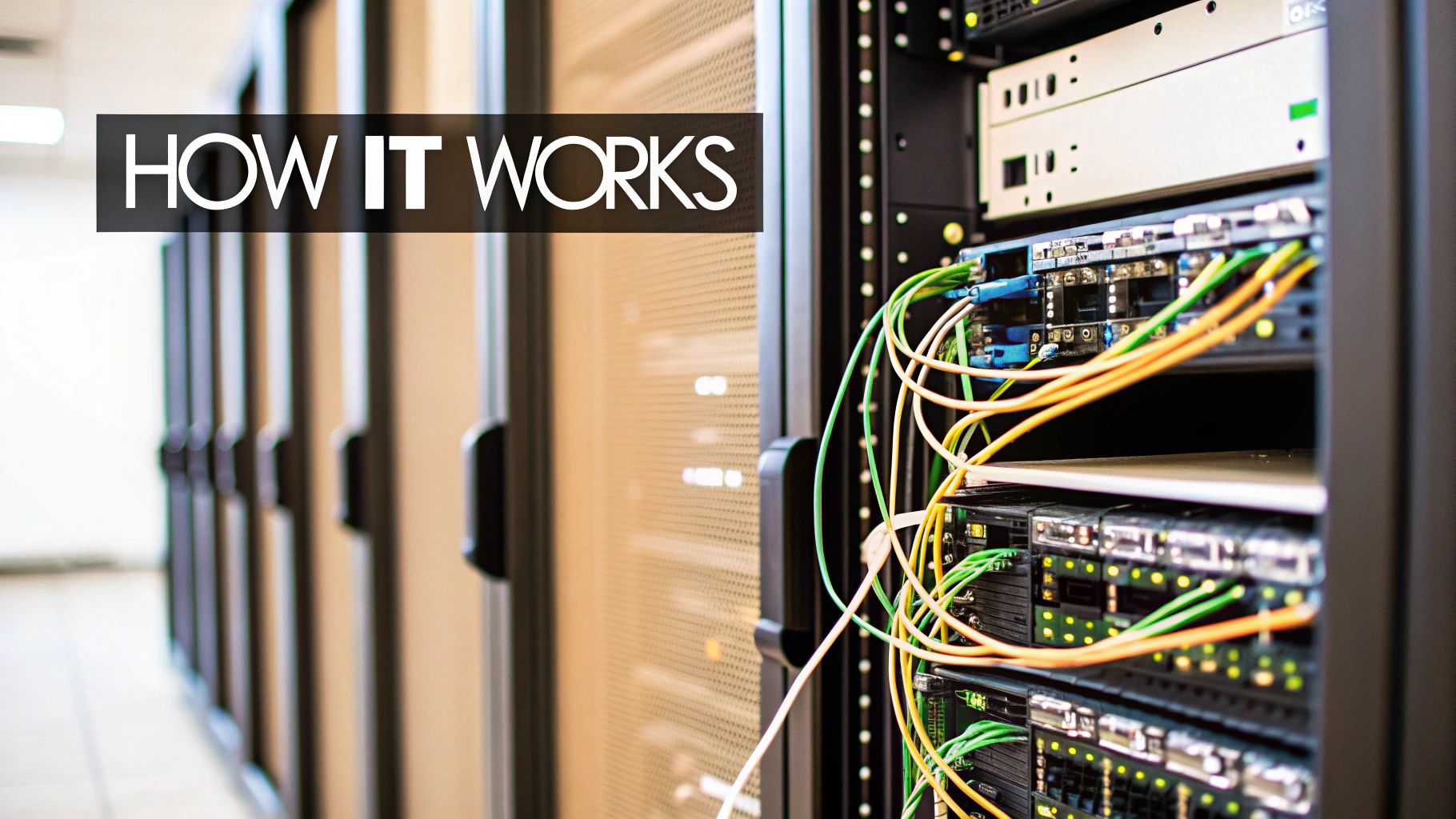
This server then acts as the middleman, but here's where it gets interesting. Instead of using a typical datacenter IP address that websites can spot a mile away, it uses a static IP address officially registered to a major Internet Service Provider.
The Hybrid Advantage Explained
The real magic happens in this dual-component setup. The website you're visiting doesn't see a request coming from some anonymous cloud server farm. Instead, it sees a connection from what looks like a legitimate, trustworthy home internet user. This simple switch is what helps you sidestep the blocks, CAPTCHAs, and other headaches that plague datacenter proxies.
This architecture gives you two massive benefits rolled into one:
The Datacenter Backbone: Hosting the server in a datacenter means you get lightning-fast connection speeds, often hitting over 1 Gbps, plus near-perfect uptime for your most important tasks.
The ISP-Registered IP: Using an IP address that belongs to a real ISP gives your connection the authority and legitimacy of a regular home user, dramatically improving your success rates.
Think of it like this: you get the raw power of a datacenter's engine combined with the trusted identity of an ISP's license plate. This is the core mechanic that makes an ISP proxy what it is.
The "static" part of the IP is also a huge deal. Unlike rotating residential proxies that can change your IP address on a whim, an ISP proxy gives you a consistent, high-reputation address that stays the same.
This stability is absolutely essential for any task where you need to maintain a continuous session. Think managing social media accounts, tracking SEO rankings over time, or getting through a multi-step checkout without being booted. It's this unique combination of speed, stability, and authority that makes them such a powerful tool for serious online work.
Where ISP Proxies Provide a Competitive Edge
Okay, let's move from theory to real-world application. ISP proxies really start to shine in high-stakes situations where speed, stability, and trust are everything. It’s their unique mix of datacenter-grade performance and residential-style legitimacy that gives them a serious advantage in some very demanding fields.
For any business doing large-scale web scraping for market intelligence, speed is the name of the game. You're trying to pull down massive amounts of data as fast as you can, and frankly, residential proxies can sometimes lag. ISP proxies deliver the raw power to get that data efficiently, while their legitimate IP addresses help you sidestep the constant blocks and CAPTCHAs that make using datacenter proxies a nightmare.
Driving Success in Key Industries
The rise of ISP proxies is directly tied to the needs of businesses running data collection, automated workflows, and verification processes. For instance, an industry giant like Bright Data now runs a network of over 700,000 static ISP proxies, backing them with a 99.99% uptime guarantee—that shows you the kind of serious infrastructure we're talking about. Other providers, like SOAX, manage huge IP networks using AI-powered routing to get around blocks, which really underscores how vital this tech has become for large-scale automation. You can read more about the rise of ISP proxies in business on DesignRush.com.
So, where are they the clear winner? Here are a few perfect examples.
SEO Monitoring: To accurately track your search engine rankings, you need a stable, reputable IP address. An ISP proxy lets SEO tools check keyword positions from a specific location, over and over, delivering clean data without getting flagged as a bot by Google.
Sneaker Copping: In the cutthroat world of limited-edition sneaker drops, every millisecond counts. The low latency and raw speed of ISP proxies give sneaker bots the edge they need to fly through the checkout process faster than any human ever could, all while looking like a legitimate buyer.
Social Media Management: If you’re managing multiple social media accounts for clients, the last thing you want is to trigger security alerts or get locked out. ISP proxies provide the kind of persistent, trustworthy sessions needed to safely handle numerous profiles from one place.
Tangible Business Outcomes
In every one of these cases, the features of an ISP proxy translate directly to real business results. For an e-commerce intelligence firm, it means getting competitor pricing data before anyone else. For a sneaker reseller, it’s the difference between a massive score and a total bust. And for a marketing agency, it’s about ensuring the client accounts they manage are always safe and accessible.
The competitive edge comes from combining elite speed with a trusted digital identity. This dual advantage allows businesses to operate automated tasks at an industrial scale without sacrificing the legitimacy needed for success.
Ultimately, choosing an ISP proxy is about picking the right tool for a high-performance job. When the task demands both blistering speed and rock-solid reliability, they are often the only solution that consistently delivers. Their ability to fly under the radar while performing like a datacenter proxy provides a powerful, undeniable edge in today's online world.
How To Choose a High-Quality ISP Proxy Provider
Alright, so you see the value in ISP proxies. The next big step is actually picking a provider that lives up to the hype. The market's getting crowded, and honestly, not all services are built the same. A bad choice can saddle you with slow speeds, constant blocks, and a drained wallet—turning a powerful tool into a massive headache.
To make a smart decision, you have to look past the flashy marketing and dig into the stuff that really matters: performance and reliability. You're looking for a partner whose gear can handle your toughest tasks without breaking a sweat.
Evaluating Core Performance Metrics
First things first: network performance. When you're running sneaker bots or scraping data at high frequency, every single millisecond counts. You absolutely need a provider that guarantees speed and stability, which means you need to ask the right questions.
Network Speed and Latency: Are they offering 10 Gbps connections? Low latency is non-negotiable, especially if the proxy server isn't physically close to your target website.
Guaranteed Uptime: Look for a provider that puts their money where their mouth is with a contractual uptime guarantee, ideally 99.9% or higher. Anything less is a gamble that could shut down your operations at the worst possible time.
Bandwidth and Connection Policies: Do they cap your bandwidth or limit how many connections you can run at once? The best providers usually offer unlimited bandwidth so your tasks can run full-throttle without getting choked.
Assessing Trust and Support
Beyond pure speed, the quality and reputation of the IP addresses themselves are everything. A blazing-fast proxy is completely useless if its IP has already been flagged and blacklisted everywhere. The proxy market is blowing up; the residential proxy server market alone (which includes ISP proxies) is expected to grow from USD 122.03 million in 2025 to USD 148.33 million by 2030. You can see more of these market growth trends on MordorIntelligence.com. With that kind of growth, it’s more important than ever to make sure you're dealing with a legit provider.
The best providers are totally transparent about where their IPs come from. They source them ethically and exclusively from legitimate, trusted carriers, which means the IPs have a clean history and a high reputation to keep you off blocklists.
Finally, don't ever sleep on customer support. When things go sideways—and sometimes they do—you need an expert to help you now, not hours from now.
IP Reputation and Sourcing: Make sure the IPs are from legitimate, well-known internet carriers. A clean IP pool is your number one defense against being detected.
Expert Customer Support: Is support available 24/7? You want providers with multiple ways to get in touch, like live chat or a Discord server for instant help.
Clear Policies: Check that the provider has a transparent terms of service and a clear acceptable use policy. No surprises.
Stick to this checklist, and you can confidently pick a top-tier ISP proxy provider that's a perfect fit for what you need. For a head-to-head comparison, take a look at our guide on the best ISP proxy providers available today.
Navigating The Legal and Ethical Maze of Proxies
Just because you can do something with a powerful tool like an ISP proxy doesn't always mean you should. While owning and using proxies is completely above board, how you use them is what really matters. It all comes down to drawing a firm line in the sand between responsible data gathering and shady, malicious activity.
So, what does ethical use look like? It's really just about respecting the rules of the road on the internet. That means honoring a website's robots.txt file—which is basically their way of telling scrapers what's off-limits—and playing by their terms of service. This is a big deal, and if you're scraping data, you absolutely need to know the answer to questions like, Is website scraping legal?. How you deploy your proxies hinges on it.
Staying Within Legal Boundaries
And then there are the actual laws. Things like GDPR in Europe and CCPA in California aren't just suggestions; they're strict regulations about how personal data can be handled. If you're using proxies, you have to operate within these frameworks. It's not optional.
The whole point is to use the speed and reliability of ISP proxies for legitimate work—like market research, checking on your ads, or tracking prices—while steering clear of the bad stuff like spamming, credential stuffing, or other cybercrime.
This isn't just about being a good internet citizen; it's about building a sustainable strategy. The proxy server market is booming—it was valued at USD 2.51 billion in 2024 and is expected to hit USD 5.42 billion by 2033. You can dig into the full research about these market growth projections on MarketGrowthReports.com. By understanding and respecting these legal and ethical lines, you position yourself to be a long-term player in a rapidly growing field.
Frequently Asked Questions About ISP Proxies
To wrap things up, let's tackle some of the most common questions people have about ISP proxies. Getting these answers straight will help you figure out the best way forward for your own projects.
Are ISP Proxies Always Better Than Residential Proxies?
Not necessarily—it’s all about picking the right tool for the job. ISP proxies are the champions when you need blazing-fast speed and rock-solid stability for long, uninterrupted sessions. Think about managing a social media account or running an SEO tracker for hours on end; you need that IP to stay put.
On the flip side, rotating residential proxies are your best bet for tasks that need a ton of different IPs and the highest possible anonymity. If you're scraping data from heavily protected websites on a massive scale, the constant churn of real user IPs from a residential network is way better at flying under the radar. It really just boils down to what your project demands.
Can Websites Still Detect and Block ISP Proxies?
While they're a massive step up from datacenter proxies, no proxy is completely invisible. Sophisticated sites can sometimes still flag an IP, but the risk is dramatically lower. The big difference is where the IP comes from—since an ISP proxy IP is officially registered to a real Internet Service Provider, it looks far more legit.
The best defense against getting blocked is the quality of your proxy provider. Good services are obsessed with keeping their IP pools clean and reputable, constantly checking to make sure none have been blacklisted. This hands-on management makes a huge difference in avoiding detection.
When you invest in a premium provider, you're paying for that reliability and a much higher success rate. If you want to dive deeper into the technical side of things, check out our complete guide to ISP proxies in our help center.
How Difficult Is It to Set Up an ISP Proxy?
Getting started is usually dead simple, even if you’ve never touched a proxy before. The best providers design their dashboards and instructions to be as user-friendly as possible. After you sign up, you'll get a set of credentials that looks something like this:
IP Address: The address of the proxy server.
Port Number: The specific port you'll connect through.
Username: Your login name for authentication.
Password: Your key to get access.
You just copy and paste these details into the proxy settings of your web browser or whatever software you're using, and you're good to go. Most tools, from automation bots to scrapers, have dedicated fields for this info, so the whole process usually takes just a couple of minutes.
Ready to see what a top-tier network can do for your speed and reliability? HypeProxies offers premium ISP and residential proxies built on a 10 Gbps fiber network for performance that’s hard to beat. Get your project up and running with our clean, high-trust IPs by visiting us at https://hypeproxies.com.
Share on

$1 one-time verification. Unlock your trial today.
Stay in the loop
Subscribe to our newsletter for the latest updates, product news, and more.
No spam. Unsubscribe at anytime.